EBV-associated cancer biology

Epigenomics

Integrative functional genomics of Epstein-Barr virus regulation, host chromatin, and cancer-relevant transcriptional programs.

Overview

Epigenomics

This research connects viral oncoproteins, host transcription factors, super-enhancers, enhancer RNAs, and three-dimensional chromatin organization to explain how EBV remodels B-cell regulatory programs.
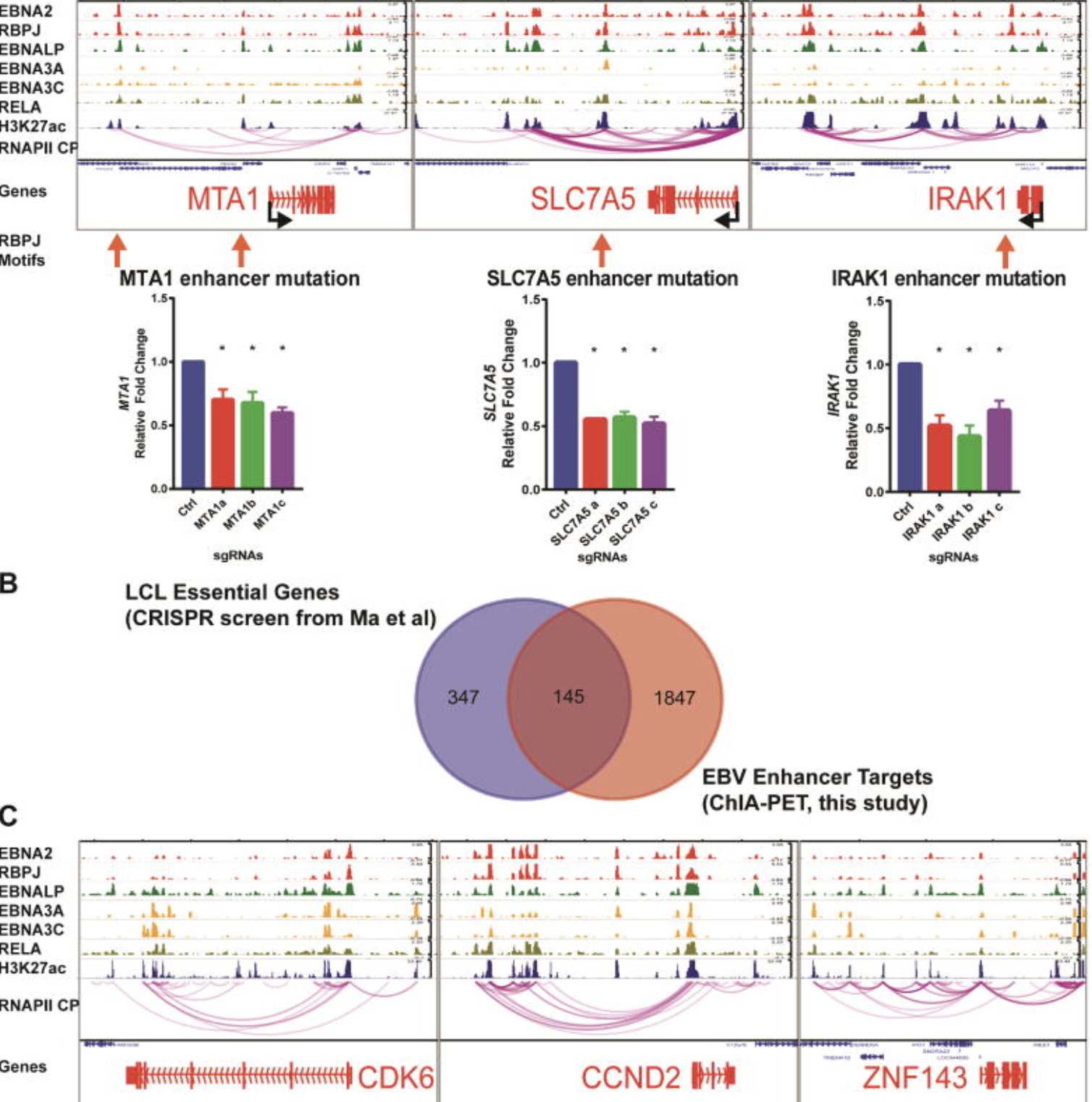
  • Mapped EBV oncoprotein super-enhancers that control B-cell growth.
  • Built an EBV regulome linking viral and host regulatory elements to target genes.
  • Studied enhancer RNAs and long-range regulatory interactions that support MYC expression and lymphoblast proliferation.
  • Integrated ChIP-seq, RNA-seq, enhancer maps, and chromatin conformation data.
Epigenomics figure

Publications

Related work

Representative publications connected to this project.

2017

The Epstein-Barr virus regulome in lymphoblastoid cells.

Jiang S, Zhou H*, Liang J, Gerdt C, Wang C, Ke L, Schmidt SC, Narita Y, Ma Y, Wang S, Colson T.

Cell Host Microbe. 2017;22(4):561-573.

2015

Epstein-Barr virus oncoprotein super-enhancers control B cell growth.

Zhou H, Schmidt SC, Jiang S, Willox B, Bernhardt K, Liang J, Johannsen EC, Kharchenko P, Gewurz BE, Kieff E, Zhao B.

Cell Host Microbe. 2015;17(2):205-216.

2016

Epstein-Barr virus super-enhancer eRNAs are essential for MYC oncogene expression and lymphoblast proliferation.

Liang J, Zhou H, Gerdt C, Tan M, Colson T, Kaye KM, Kieff E, Zhao B.

Proc Natl Acad Sci U S A. 2016;113(49):14121-14126.