Methods
Develop scalable and interpretable statistical methods for rare variants, multi-ancestry sequencing studies, functional annotation, and biobank-scale outcomes.
Research profile
A computational biologist and engineer working across statistical genetics, functional genomics, and biomedical software.
Biography
My research is driven by a practical question: how can we turn increasingly massive genomic datasets into interpretable biological and medical discoveries?
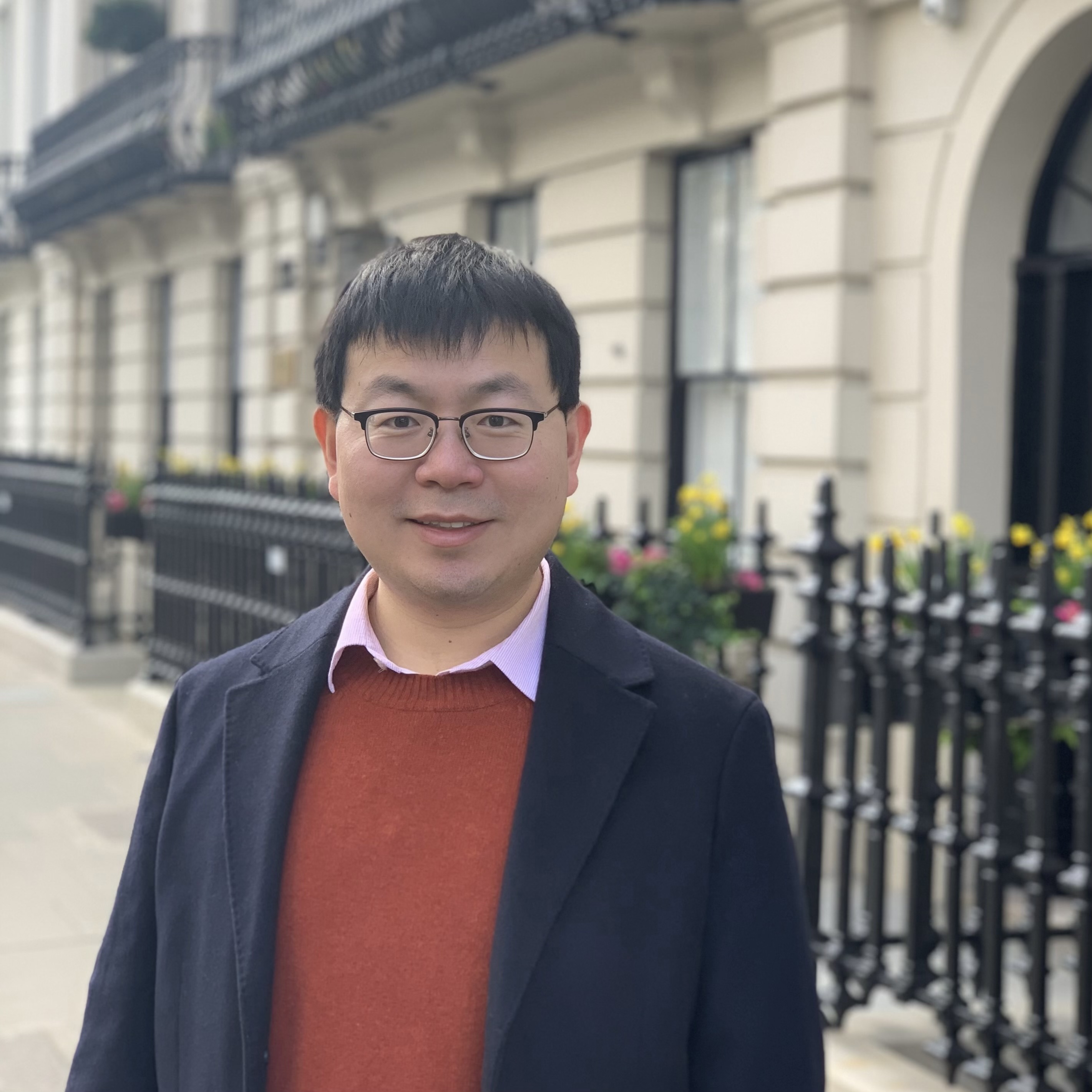
Dr. Hufeng Zhou is a Research Scientist in the Department of Biostatistics at the Harvard T.H. Chan School of Public Health and previously served as an Instructor/Junior Faculty Member at Harvard Medical School and Brigham and Women's Hospital. His work spans human population genetics, functional annotation of genetic variants, EBV-associated cancer epigenomics, pathway data integration, protein-protein interaction prediction, AI-driven genomic analysis, digital pathology, and scientific software engineering.
Across these areas, the common theme is building rigorous computational methods and usable research infrastructure for complex biological data. This includes rare-variant association methods for whole-genome sequencing studies, annotation resources such as FAVOR, and integrative genomic analyses of viral and host regulatory programs.
Research agenda
The research program is organized around methods, translation, and reusable infrastructure for genomic medicine.
Develop scalable and interpretable statistical methods for rare variants, multi-ancestry sequencing studies, functional annotation, and biobank-scale outcomes.
Apply machine learning and deep learning to variant annotation, WGS quality control, multi-omic integration, and H&E whole-slide pathology analysis.
Build open, maintainable tools and databases that help scientists query, annotate, visualize, and analyze genome-scale data.
Expertise
Core areas of expertise across computation, genomics, software engineering, and collaborative biomedical science.
Whole-genome sequencing, variant annotation, population genetics, rare-variant association, multi-omics integration, and disease genomics.
Epigenomics, enhancer biology, transcriptional regulation, EBV-associated cancers, 3D genome organization, and regulome construction.
Research databases, web portals, command-line tools, R packages, data pipelines, visualization systems, and production-minded scientific workflows.
Consortium-scale analyses across TOPMed, GSP, population studies, cancer genetics, sleep genomics, and biomedical informatics collaborations.
Career
A concise view of training, Harvard appointments, editorial service, and honors.
Harvard T.H. Chan School of Public Health, Department of Biostatistics. Supervisor: Prof. Xihong Lin.
Harvard Medical School and Brigham and Women's Hospital. Supervisor: Prof. Elliott Kieff.
Harvard Medical School and Brigham and Women's Hospital. Supervisor: Prof. Elliott Kieff.
National University of Singapore, School of Computing and NUS Graduate School for Integrative Sciences and Engineering. Supervisor: Prof. Limsoon Wong.
Recognition
These details help round out the job-market profile beyond publications alone.
Career Development Grant Fellow, Leukemia & Lymphoma Society, 2015-2018. NGS Scholarship, National University of Singapore, 2009-2013.
Genetics Section Editor-in-Chief, Heliyon, Cell Press. Editor, BMC Genomics Data, Springer Nature. Editor, Microbial Immunology, Frontiers in Immunology.